
The Emotional Side of Organizational Naming
Creating Consensus During A Nonprofit Rebrand
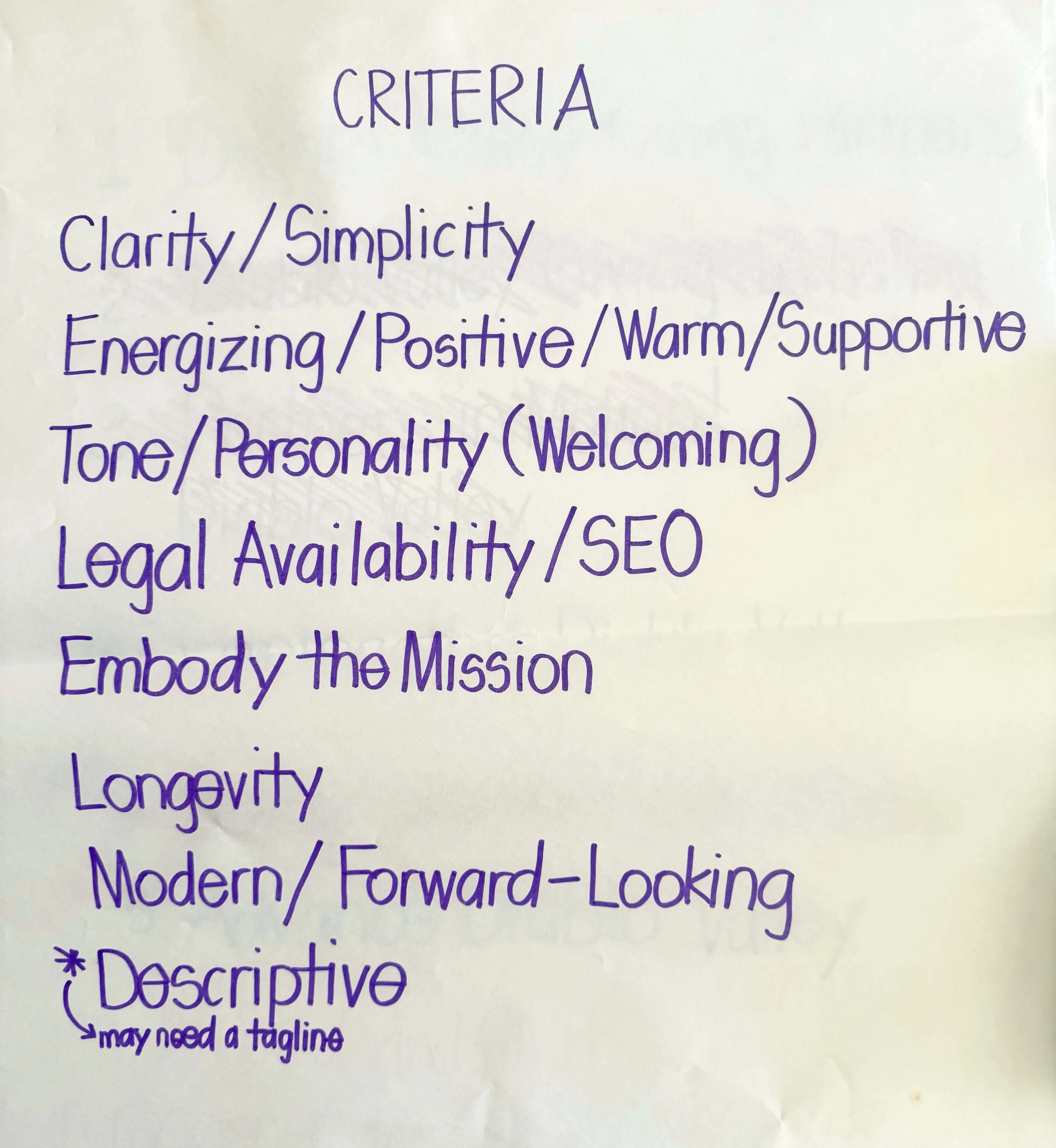
Most people think of naming an organization as a creative exercise.
It seems easy enough: brainstorm enough ideas, find the perfect name, check domain ability, design a logo, and complete the project.
In reality, organizational naming is rarely just about creativity.
It’s about identity.
This is especially true in nonprofits, legacy organizations, community institutions, and mission-driven businesses. Names often carry decades of emotional meaning.
A name becomes deeply connected to:
Community recognition;
Personal memories;
Organizational history;
Donor trust;
Internal culture;
And a collective sense of belonging.
This is why naming conversations can quickly become far more emotional than organizations initially expect.
Nonprofit organizations typically have flatter organizational structures as well. In organizations where many people have a voice, this can cause challenges with project leadership and who has the “final” say.
The challenge becomes not simply about finding a good name, but instead also navigating what a name will represent to the people deeply connected to the mission.
EMOTIONAL MISSIONS
One of the biggest misconceptions surrounding nonprofit rebrands is the belief that naming and identity decisions are purely strategic.
They are not.
Names become symbolic. Especially in long-lived organizations that have an established history and roster of supporters.
Names represent people who have built the organization, relationships formed with it, the organizational impact, and emotional identity associated with it.
People may worry about erasing history, weakening public recognition, alienating long-term supporters, abandoning values, and adjusting to a new name with a new identity.
In fact, while people involved with the naming may not believe they are resistant to change, they are often resistant to a changed internal identity.
Emotional investment is high in mission-driven organizations. Thus, it is understandable that this would spill over to changes in identity.
BUILDING CONSENSUS
Consensus doesn’t come from discovering the perfect name that everyone will magically align with. Consensus comes from building a new shared vocabulary and meaning.
Professional branding agencies are adept at leading conversations with all parties involved in the process. This is often why organizations that try to begin the naming process alone become quickly bogged down. A professional brander acts as a consensus builder. They do not start with name generation. They start with mission alignment.
The process becomes less about “winning” a naming debate, and more about people emotionally connecting to a shared future.
That emotional alignment matters far more than cleverness.
LEGACY VS. MODERNIZATION
Organizations that remain relevant over time understand the need to continually evolve while still preserving trust and legacy. They must feel relevant and be discoverable. Often they are navigating and evolving to meet:
Changing community needs;
Generational shifts;
Modernization pressures;
Expanded missions;
And new expectations.
The challenge lies in honoring an organization’s legacy and public trust with preparation for the future.
Messaging becomes essential during this process. Language such as, “new name, same mission,” is vital in transitioning stakeholders during this delicate time. A good branding agency will assist their client in identifying the right pathways to maintaining trust throughout the process.
NAMING REVEALS ORGANIZATIONAL CULTURE
One of the most surprising aspects of naming an organization is the revelation of deeper truths about the institution itself. The naming process frequently exposes communication patterns, authority structures, leadership styles, internal priorities, decision-making processes, and the emotional dynamics within the organization.
In many ways, branding projects become organizational mirrors.
This is why branding work is often misunderstood. Strong branding is not simply about visual design.
It is also about organizational translation.
It is the process of helping institutions communicate who they are, both internally and externally.
Most nonprofits initially do not see the need in this last point. However, in organizations with long legacies, in the end they most often find this work invaluable for the future.
WHY EMOTIONAL NAMING IS A SUPERPOWER
While most organizational leaders would not feel that the emotional side of branding is useful, it is paradoxically one of the strongest superpowers an organization can have.
Interestingly, in the era of AI, having invested, highly emotional supporters is a blessing. This emotional investment also translates into brands and names that have heart. As marketing becomes more automated, organizations that communicate authentic meaning and a current, recognizable identity may become even more valuable to a public looking for authenticity and trust.
THE STRONGEST ORGANIZATIONAL NAMES
Ultimately, the strongest names are not necessarily the trendiest and most clever. They are names that create a balance between the past and the present, between present-day impact and future aspirations.
Naming is not just about choosing words. It’s about a connection to a mission, organization, and the people within it and served by it.
Are you looking to undergo the naming process with your organization? Rarity Marketing can help you navigate this process with consensus-building meetings, idea generation, stakeholder presentations, and other rebranding assets.
